Azmi Haider
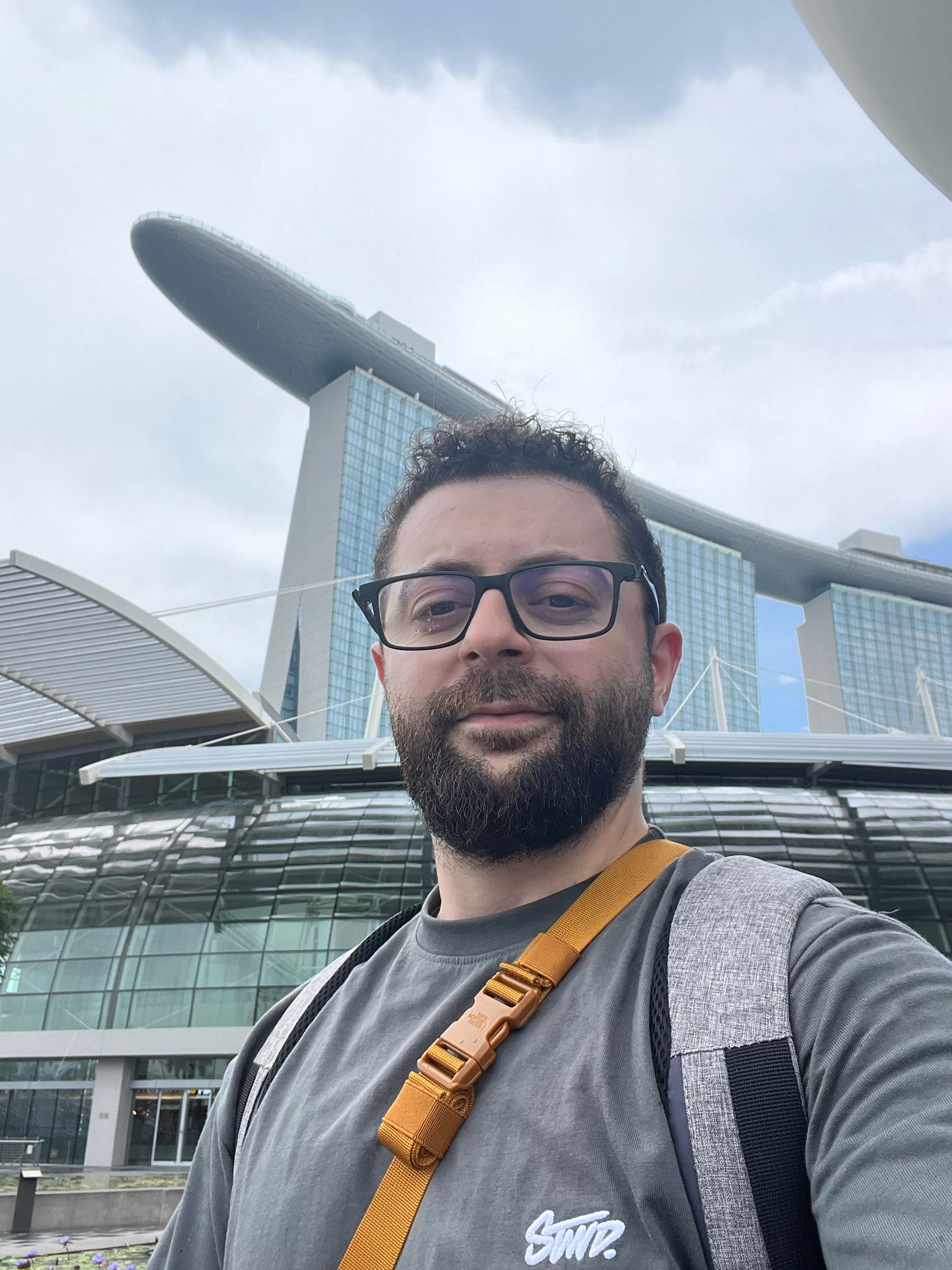
PhD in Computer Science from the University of Haifa, advised by Dr. Dan Rosenbaum. My research sits at the intersection of computer vision, generative modeling, and neural representations: learning compact representations of continuous signals, and building efficient methods for reconstruction and probabilistic inference from sparse or incomplete observations. My work spans tokenized neural fields and diffusion and flow-based generative models, with applications to 3D scene reconstruction, novel-view synthesis, physical fields, and image modeling [thesis].
I also hold an M.Sc. in Computer Science from the University of Haifa [thesis] and a B.Sc. in Electrical Engineering from the Technion. Alongside my studies, I worked at Intel on computer vision and deep learning, including 3D cameras, LiDAR, and face recognition.
Email · Google Scholar · CV · GitHub · X
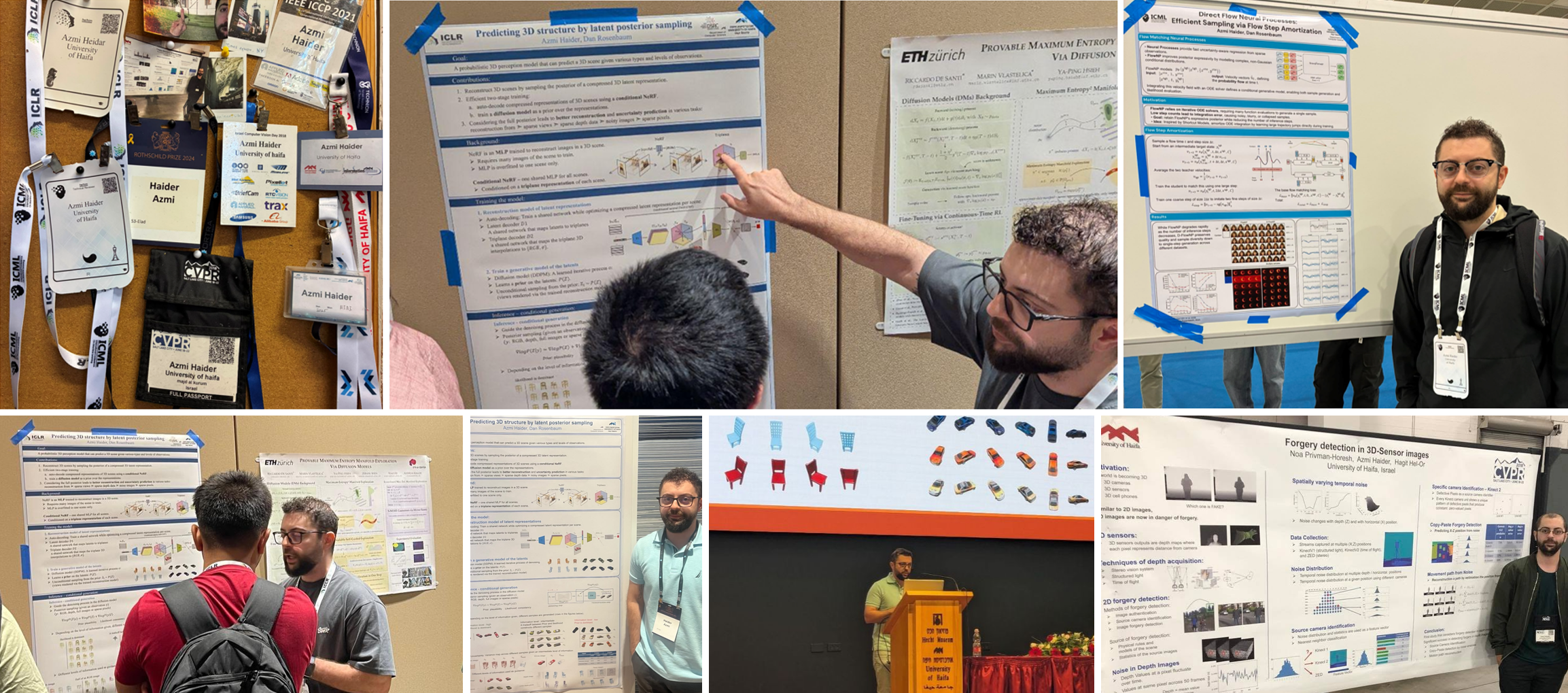
Research Interests
- Generative models for reconstruction: diffusion and flow-based models that reconstruct and generate images, depth, and 3D scenes from sparse or incomplete observations.
- Representations of continuous signals: learning continuous and discrete (tokenized) representations that are compact, structured, and efficient to use.
- Fast amortized inference: making probabilistic inference fast enough for real-world and large-scale use.
- Deep learning for computer vision: representation learning and generative modeling for visual data.
I’m interested in research and applied roles in both industry and academia, particularly where generative modeling and computer vision are built into real products.
Research
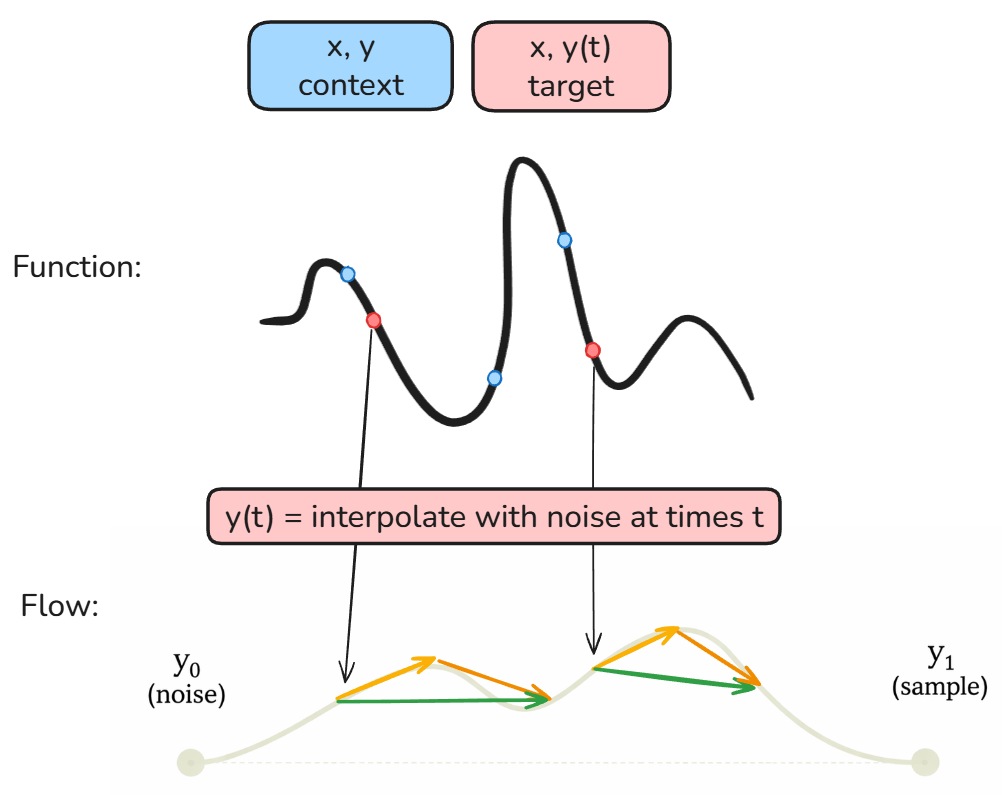 Direct Flow Neural Processes: Efficient Sampling via Flow Step Amortization - In this work (ICML-W 2026), we introduce Direct Flow Neural Processes (D-FlowNP), a framework for efficient inference in flow-based Neural Processes. By amortizing iterative flow inference, D-FlowNP enables accurate posterior sampling using only a fraction of the original inference steps. Experiments on Gaussian processes, image completion, scientific datasets, and Bayesian optimization show that D-FlowNP achieves substantial speedups while maintaining the predictive quality of the underlying flow-based model.
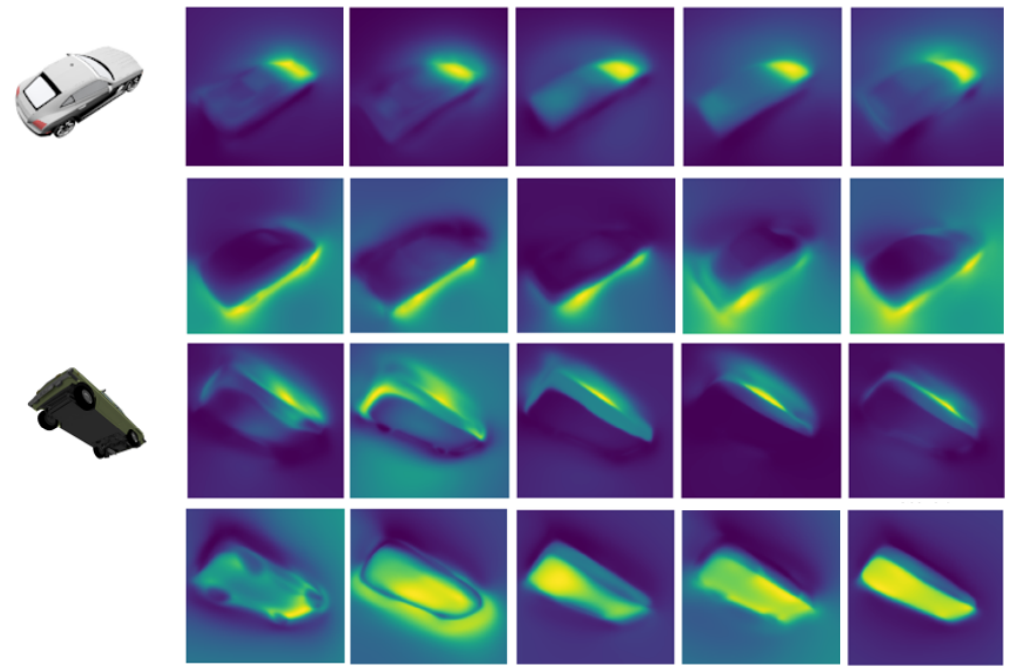 Tokenized Neural Fields: Structured Representations of Continuous Signals - In this work (NeurIPS-W 2025), we introduce Tokenized Neural Fields (TNF), a unified framework that represents continuous signals using a compact set of learnable tokens that interact with coordinate queries via cross-attention. By decoupling the representation from the decoder architecture, TNF enables scalable training across modalities, efficient adaptation to new signals, and probabilistic inference directly in token space. We validate TNF on 1D regression, 2D image reconstruction, and 3D scene modeling, achieving higher fidelity with fewer parameters than encoder- or latent-based baselines, and show emergent token specialization plus generative modeling when paired with diffusion transformers.
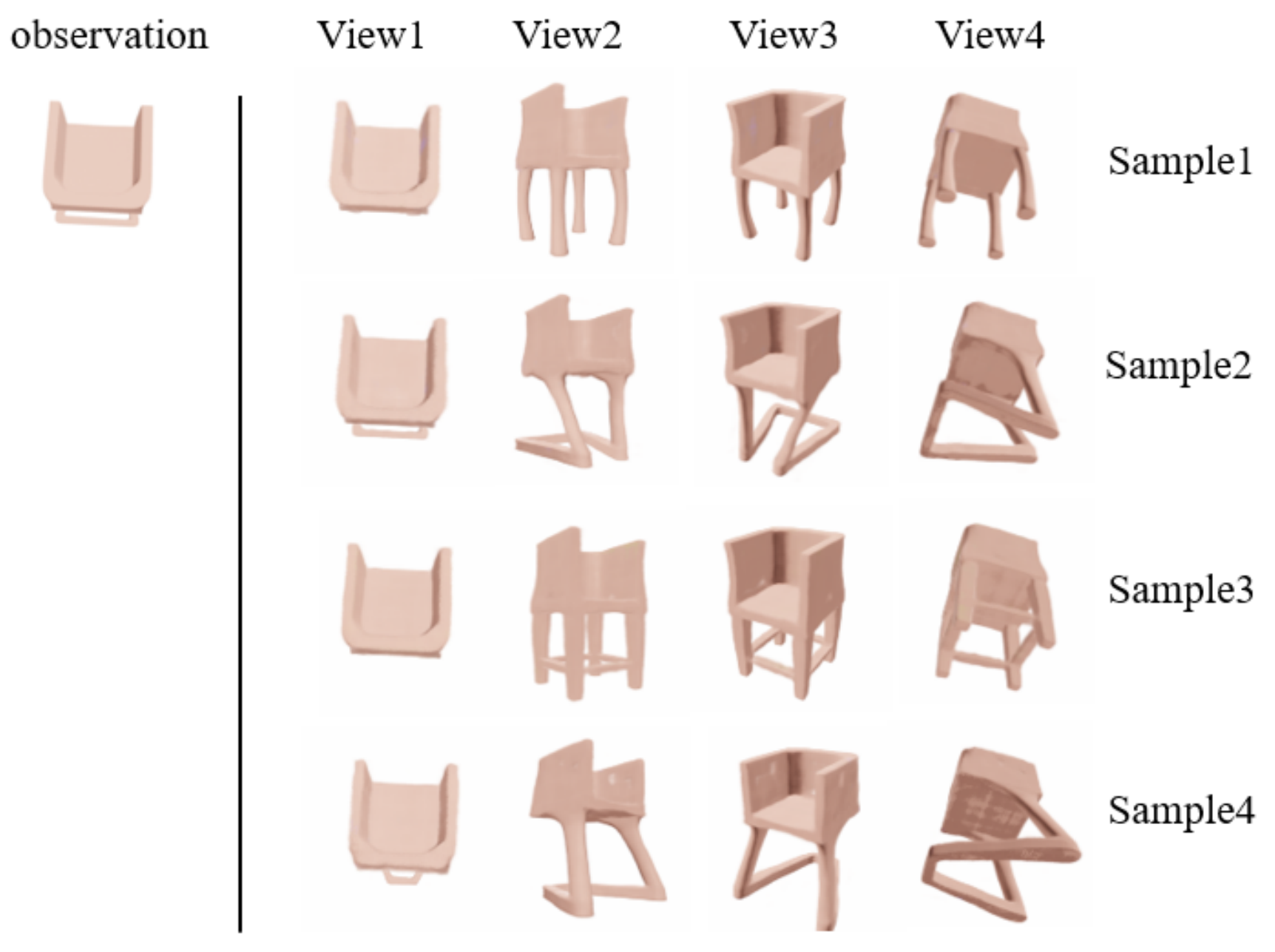 Predicting 3D Structure by Latent Posterior Sampling - In this work (ICLR-W 2025), we combine a NeRF-based 3D scene representation with diffusion models to treat 3D reconstruction as probabilistic inference under uncertainty. We model the scene as a stochastic latent variable, learn a prior over latents with a diffusion model, and perform posterior sampling using score-based inference guided by a rendering-based likelihood term. Using a two-stage training pipeline (reconstruction model first, diffusion prior second), we demonstrate posterior sampling for reconstruction from diverse observation types, including single-view/multi-view images, noisy inputs, sparse pixels, and sparse depth, while capturing the varying uncertainty across these settings.
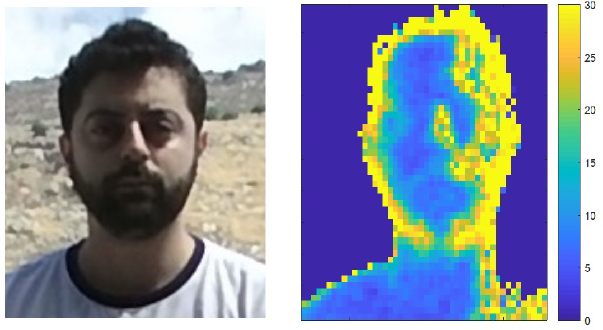 What Can We Learn from Depth Camera Sensor Noise? - In this work (Sensors 2022), we show that depth-camera sensor noise—often ignored or treated as something to denoise—contains rich information about the captured scene. From noise patterns alone, we can infer an object’s depth and location, identify the camera type (and even the specific device), and estimate scene cues such as light direction; we also demonstrate applications like distinguishing real vs. masked faces. Finally, we show that depth-shadow (missing-depth) size depends on scene geometry and can be used to authenticate an object’s placement in the scene.
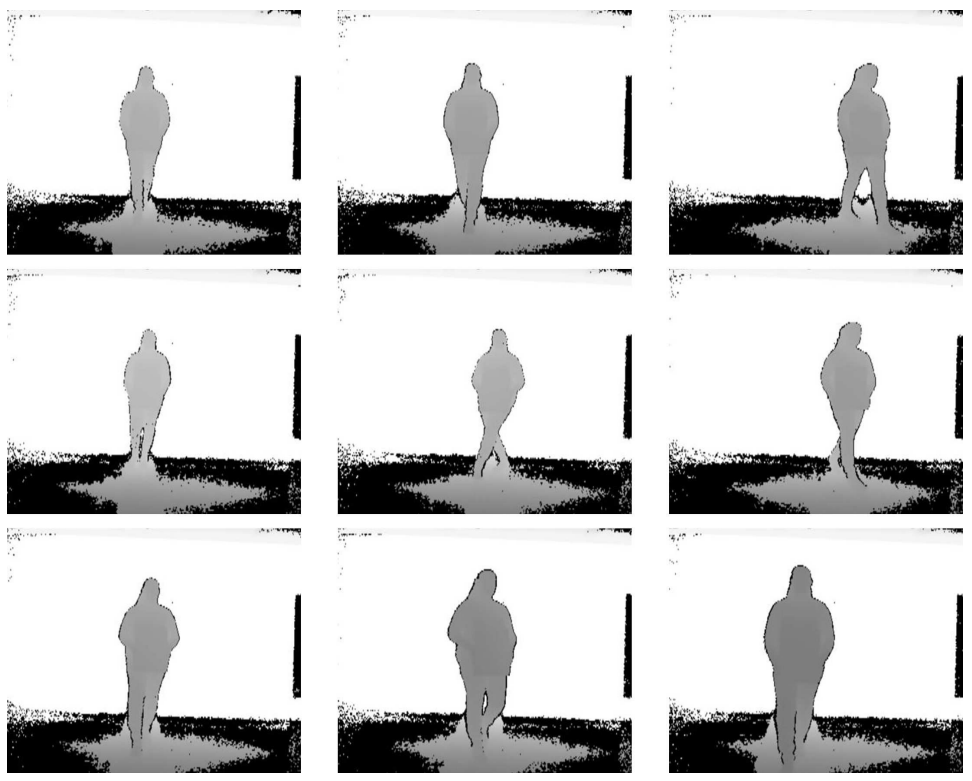 Forgery detection in 3D-sensor images - In this work (CVPR 2018), we introduce the problem of forgery detection in depth images as 3D cameras with depth sensors become increasingly common. We present an initial study showing that depth-image noise statistics can be leveraged for camera source identification and forgery detection. We also demonstrate that these noise cues can support depth reconstruction from noise.
Fun Academic Projects
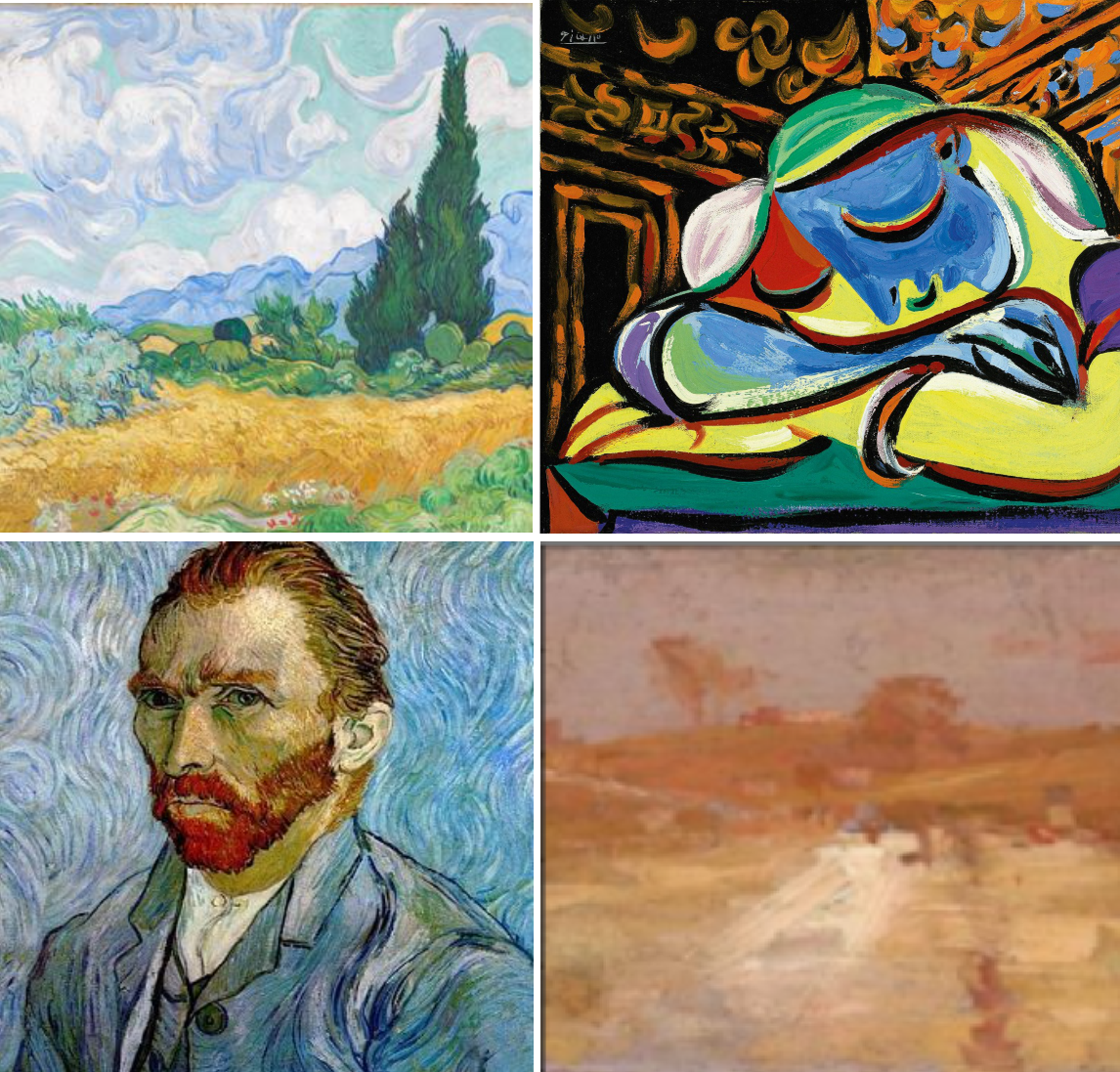 Painter by Numbers (Kaggle Competition) — My solution to the Kaggle “Painter by Numbers” competition, where the goal is to learn an artist’s painting style. We used a Siamese (triplet) CNN with shared weights to learn an artist-style embedding. Each training step samples an anchor painting from artist A, a positive painting from the same artist A, and a negative painting from a different artist B. The network maps each image to a feature vector, and we train with triplet loss to pull anchor–positive embeddings closer while pushing anchor–negative embeddings farther apart, producing a feature space where each artist forms a cluster.
We also experimented with a contrastive (pairwise) Siamese CNN: given two paintings and a binary label (same artist / different artist), we use contrastive loss to minimize the distance for same-artist pairs and increase it for different-artist pairs. Pairs are sampled by first choosing the label, then selecting paintings accordingly (two from one artist vs. one from each of two artists).
Code
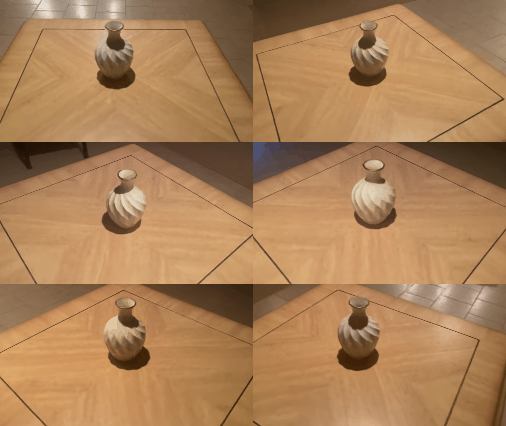 Perfect-Loop GIFs with NeRF — A small project to turn a GIF into a seamless “perfect loop” by reconstructing the scene with a NeRF and re-rendering frames along a closed camera path so the first and last frames match smoothly. Pipeline: extract frames → estimate camera poses with COLMAP → train NeRF with TensoRF → render along a circular loop → export the new GIF.
Code
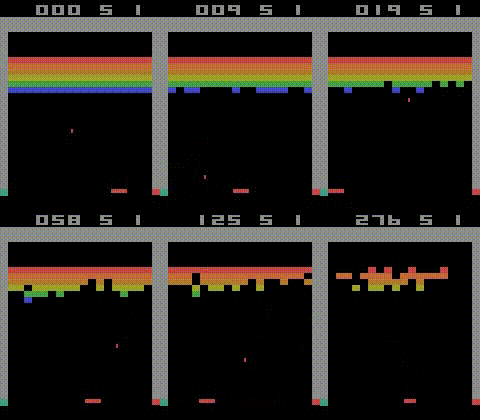 RL Agents for Breakout & CartPole — Implemented reinforcement-learning agents to play Breakout and CartPole Atari games, training policies from interaction with the environment and evaluating learning curves and performance across runs.
Code
Unplugged
When I’m away from the keyboard, I enjoy sketching with graphite pencils, fineliners, and markers. Here’s a collection of some of that work.
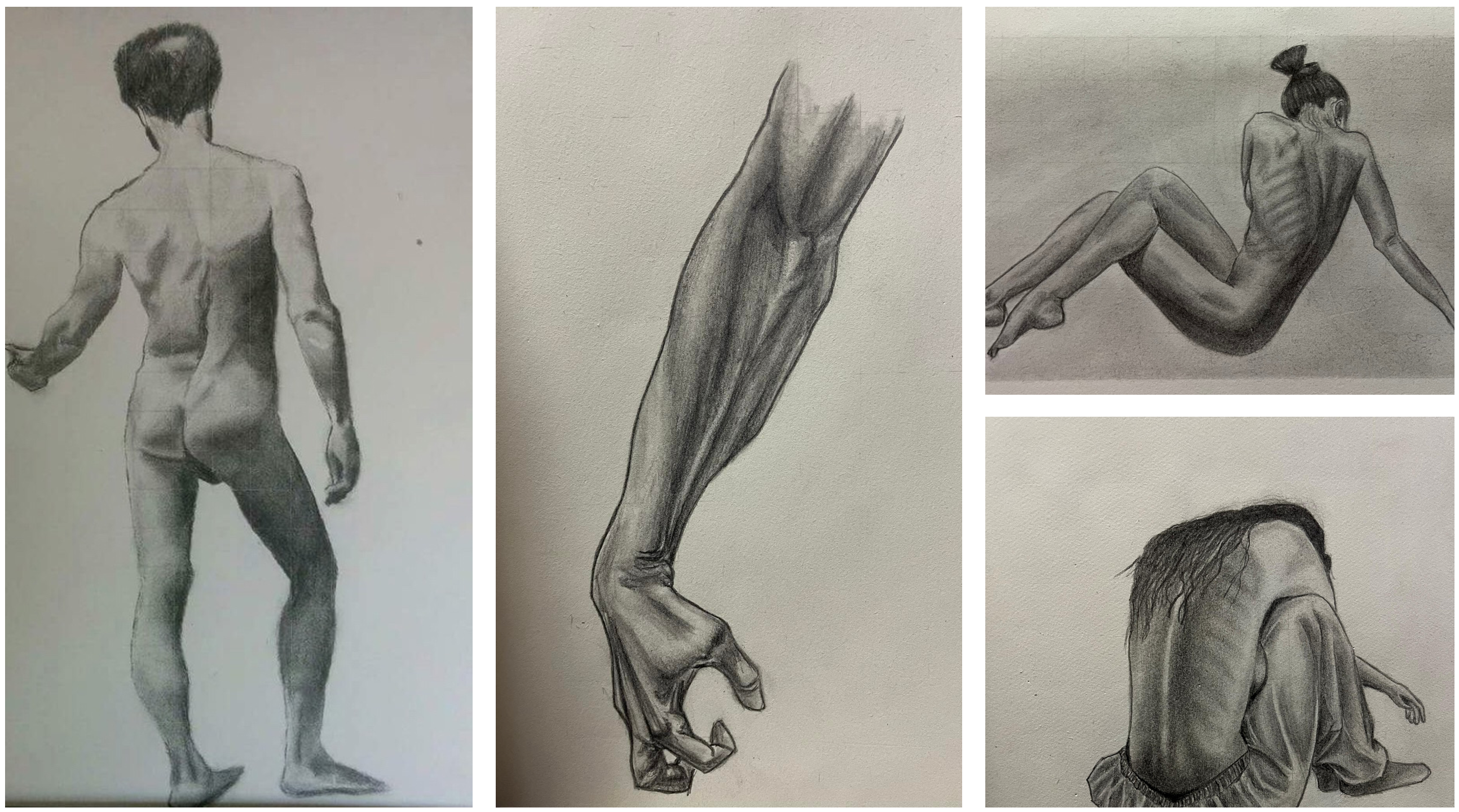
Pencil drawings — Done with graphite pencils (HB, 2B, 4B). See full gallery
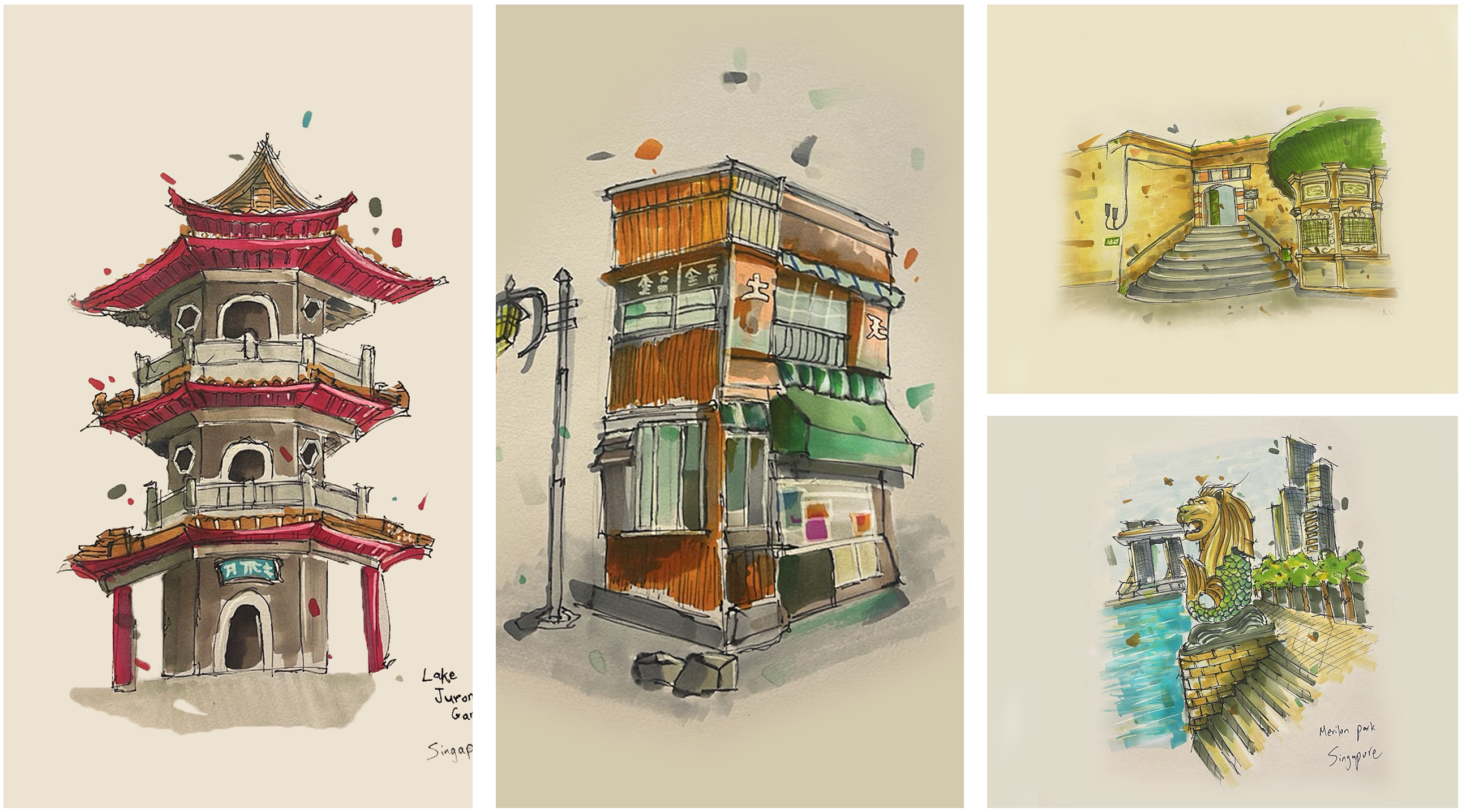
Urban Sketches Gallery — A tour of some of the places I sketched while visiting. Done with Pens and Markers. See full gallery
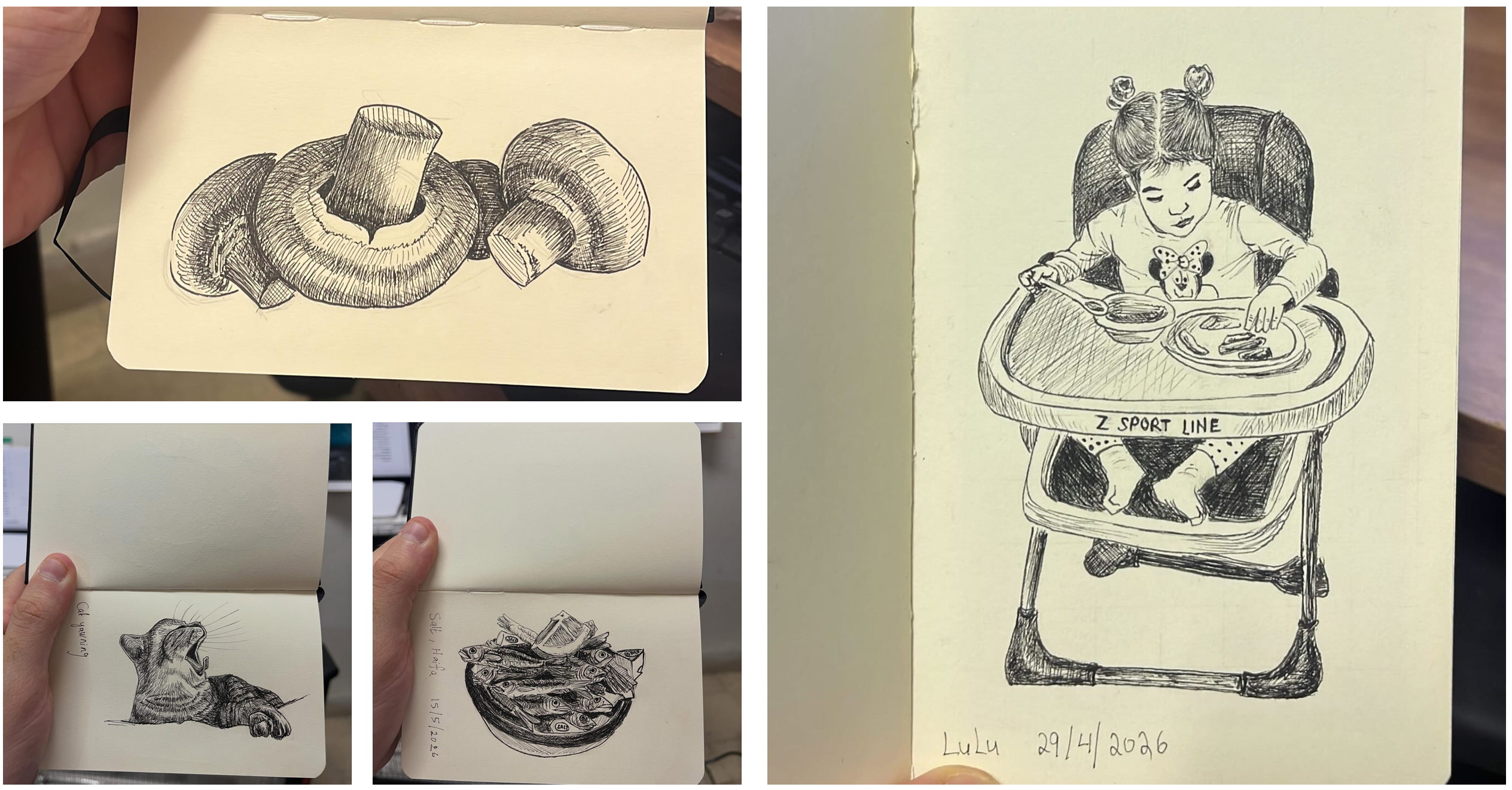
Sketch Journal — Everyday items journaling. Done with Micron pens. See full gallery